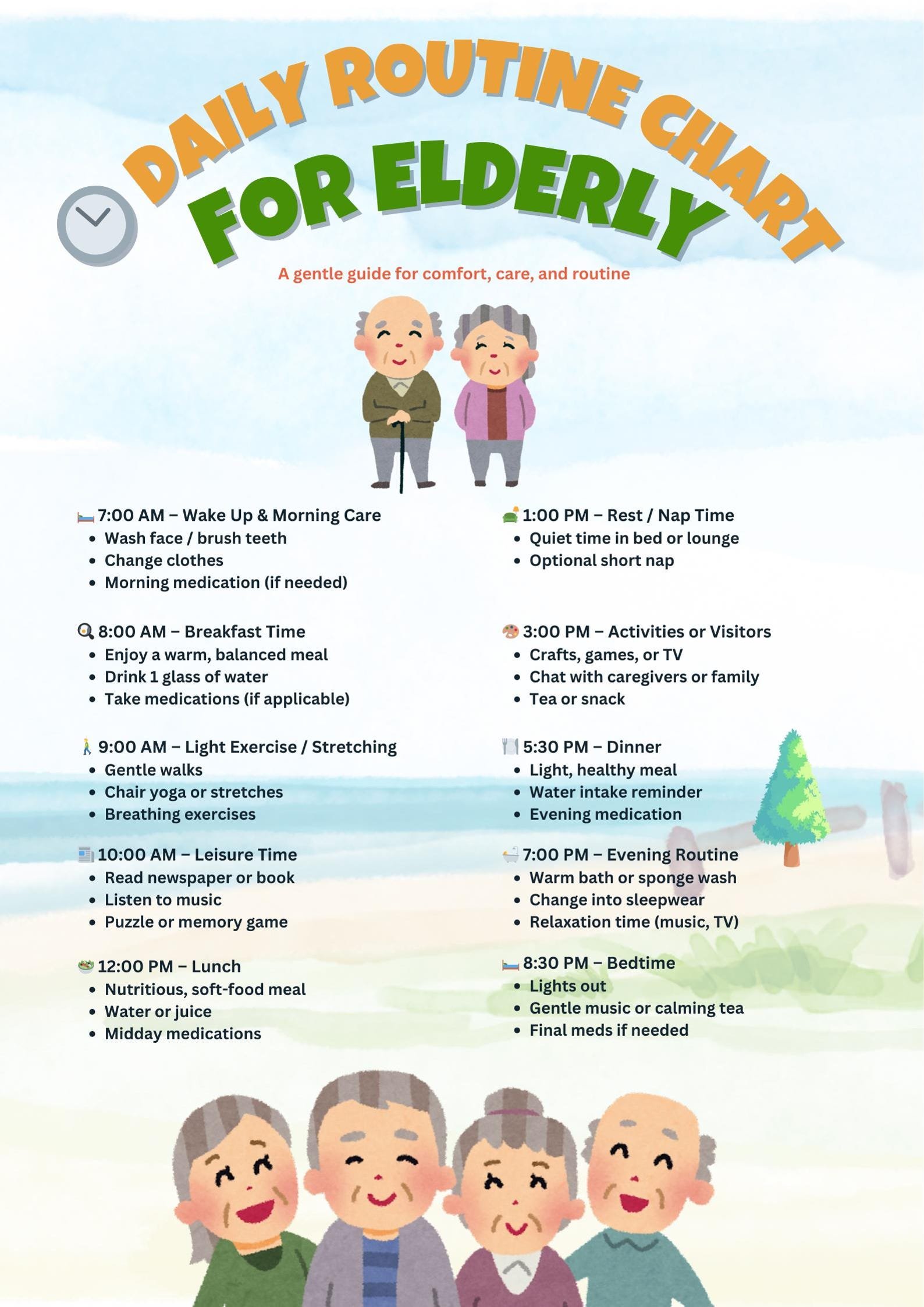
A daily routine helps older adults maintain independence, feel secure, manage daily needs, and stay connected with others. Regular habits can support sleep, nutrition, movement, medication safety, and emotional well-being.
Across the United States, many older adults want to remain in their own homes, keep their usual habits, and manage daily life with as much freedom as possible. Retirement, health changes, the loss of a loved one, or a move to assisted living can disrupt familiar patterns. A simple daily routine can help bring structure back to everyday life without making each day feel strict or dull.
Routine is useful because it gives the day a clear shape. Waking up at a regular time, eating balanced meals, taking prescribed medicines as directed, walking safely, and speaking with family or friends can make daily needs easier to manage. These habits may also reduce stress and help caregivers notice changes in a person’s health or behavior.
A good routine is not a rigid timetable that every older person must follow. It is a flexible plan built around personal preferences, physical ability, health needs, culture, and social life. Understanding why routine is important for elderly adults can help families and caregivers create a daily plan that supports dignity, comfort, safety, and independence.
Source: elitecarehc.com
What Is a Daily Routine for Older Adults?
A daily routine is a set of regular activities that gives shape to the day. It may include getting up, washing, eating breakfast, taking prescribed medicines, exercising, resting, meeting friends, and preparing for bed. Some activities happen at fixed times, while others follow a familiar order.
For an older adult, a routine can be as simple as opening the curtains after waking, drinking water, getting dressed, and eating breakfast before starting other tasks. A person who needs help with bathing, dressing, or meals may benefit from having those activities take place in a familiar order each day.
The purpose is to make daily life easier, not to control every hour. A useful routine leaves room for choice, family visits, appointments, hobbies, and unexpected events. It should change when a person’s health, energy, or needs change.
Source: elitecarehc.com
Morning habits
Waking up, using the bathroom, washing, dressing, eating breakfast, and reviewing the day’s plans.
Daytime activities
Taking prescribed medicines as directed, walking safely, doing household tasks, enjoying hobbies, and staying socially active.
Evening habits
Eating dinner, relaxing, preparing for the next day, reducing late-night stimulation, and following a calming bedtime pattern.
Routine Versus a Strict Schedule
A routine focuses on familiar patterns, while a strict schedule requires activities to happen at exact times. For many older adults, a familiar sequence is more helpful than a minute-by-minute plan. For example, breakfast may happen after morning hygiene without needing to begin at precisely 8:00 a.m.
Flexibility matters because older adults may have medical appointments, changing energy levels, or different sleep needs. The best plan gives structure while allowing the person to make choices and respond to the day.
Use regular anchors
Keep a few important habits consistent, such as getting up, eating meals, and preparing for bed.
Allow personal choice
Let the older adult decide which hobbies to enjoy, when to rest, and how to spend free time when possible.
Why Is Routine Important for Elderly Adults?
Routine matters because it makes daily responsibilities more predictable. Older adults may face changes in mobility, memory, social roles, or health. Familiar habits can make it easier to complete essential tasks and preserve a sense of control.
A regular pattern also helps families and caregivers plan support. When meals, walks, personal care, and rest occur in a familiar order, it may be easier to spot a missed meal, an unusual period of fatigue, or a change in behavior. A routine cannot prevent every health problem, but it can help people notice when something seems different.
The value of routine varies from person to person. Someone who lives independently may use a calendar and meal plan, while a person who needs daily care may benefit from visual reminders and help with personal tasks. In both cases, the goal is to support quality of life rather than impose unnecessary rules.
Source: cjcareconsulting.com
Greater predictability
Familiar patterns can make the day easier to understand and reduce uncertainty about what comes next.
More consistent self-care
Regular reminders can help with meals, hygiene, hydration, movement, and prescribed treatment.
Better coordination
Family members and professional caregivers can organize visits and care tasks around a shared plan.
A stronger sense of control
Choosing and following personal habits can help older adults remain involved in decisions about their own lives.
Routine Can Protect Independence
Independence does not mean doing every task without help. It means having as much control as possible over daily choices and activities. A routine can support that goal by helping an older adult remember what needs to be done and prepare for tasks in advance.
For example, keeping clean clothes in an easy-to-reach place may make dressing simpler. Placing a calendar near the kitchen can help someone track appointments, and preparing ingredients ahead of time may make cooking less tiring. Small changes can support independence without taking choices away.
Keep tools within reach
Place commonly used items in safe, accessible locations to reduce unnecessary bending, reaching, and searching.
Encourage participation
Let the older adult complete the parts of a task they can manage safely, even when another person helps with the rest.
How Routine Supports Mental and Emotional Health
A familiar daily pattern may help older adults feel calmer and more settled. Retirement, bereavement, moving home, and changes in health can remove familiar roles and habits. Having a few dependable activities can give the day direction during these transitions.
Routine can also create regular chances for enjoyment. Reading after breakfast, tending plants in the afternoon, or calling a friend in the evening gives a person something familiar to look forward to. These activities may help reduce boredom and create a stronger sense of purpose.
Routine alone does not prevent depression, anxiety, or loneliness. However, it can make space for habits that support emotional well-being, including movement, social contact, rest, and meaningful activity. Persistent sadness, loss of interest, or distress deserves attention and may require professional support.
Source: orchardparkofpermianbasin.com
Less daily uncertainty
Knowing the general shape of the day may reduce the mental effort needed to decide what to do next.
More opportunities for joy
Scheduled time for music, crafts, reading, gardening, or other interests can help keep enjoyable activities part of everyday life.
A sense of purpose
Regular responsibilities, such as watering plants or helping prepare a meal, can make a person feel involved and useful.
Routine and Loneliness
Social contact can become less frequent after retirement, the loss of a partner, or changes in driving ability. A routine that includes regular calls, visits, or group activities creates planned chances to connect with other people.
The activities should match the older adult’s interests and comfort. Some people enjoy senior centers, faith communities, libraries, or local clubs. Others prefer a short phone call, a shared meal, or a visit from one trusted friend.
Plan regular contact
Set a recurring time for family calls, friendly visits, or a favorite community activity.
Choose meaningful company
Prioritize relationships and activities the older adult genuinely enjoys instead of filling the calendar with unwanted events.
The Role of Routine in Sleep and Daily Energy
Regular sleep and wake times can help older adults maintain a more consistent sleep pattern. The body’s internal clock responds to light, activity, and daily habits. A steady morning start and a calm evening routine may support the natural transition between being awake and going to sleep.
Sleep needs differ among individuals, and aging does not mean a person must accept poor sleep. Pain, medication effects, breathing problems, frequent urination, and other health issues can interrupt rest. A routine may help, but it cannot replace assessment of an ongoing sleep problem.
Daytime activity and exposure to natural light may also support sleep. When safe and practical, an older adult can spend time outdoors, walk with a companion, or sit near a bright window. Late caffeine, long late-afternoon naps, and stimulating activities close to bedtime may interfere with sleep for some people.
Source: momandmore.com
Keep a steady wake time
Choose a wake-up time that fits the person’s needs and maintain it on most days, when practical.
Create a calming evening pattern
Use quiet activities such as reading, gentle music, or a warm wash before bed.
Make the bedroom safer
Keep pathways clear, provide suitable lighting, and make needed mobility aids easy to reach.
Review ongoing sleep problems
Ask a health professional about persistent insomnia, loud snoring with breathing pauses, or severe daytime sleepiness.
Balancing Rest and Activity
Rest is part of a healthy routine, especially for people who tire easily or live with chronic conditions. Yet spending most of the day in bed or sitting without breaks may reduce opportunities for movement and social contact. The right balance depends on the person’s health and ability.
Short periods of activity spread across the day may be easier than one long session. An older adult might walk indoors after breakfast, rest after lunch, and take part in a quiet hobby later in the afternoon. Anyone with new exercise restrictions, dizziness, chest discomfort, or significant mobility problems should seek appropriate medical advice before changing activity levels.
Break tasks into smaller steps
Alternate activity with rest so that everyday tasks remain manageable.
Watch for unusual fatigue
If tiredness is new, severe, or persistent, seek medical advice instead of assuming that aging or a busy day explains it.
How Daily Habits Support Nutrition and Hydration
Regular meal times can help older adults remember to eat and make it easier to plan balanced meals. Appetite may change with age, illness, medication, grief, or reduced activity. A predictable meal pattern gives caregivers and family members a simple way to check whether the person is eating enough.
A useful meal routine includes foods that suit the person’s health needs, culture, budget, and preferences. Meals can include a mix of vegetables, fruits, whole grains, protein foods, and other suitable choices. People with swallowing problems, kidney disease, diabetes, or other medical needs may require individual nutrition advice.
Hydration deserves similar attention. Some older adults may not notice thirst as clearly, while others limit drinks because they worry about frequent bathroom trips. Regular drink breaks can help, but people with prescribed fluid limits should follow their clinician’s guidance rather than increase fluids on their own.
Source: www.pinterest.com
Use a familiar meal pattern
Plan meals and snacks around the person’s appetite, daily activities, and medical needs.
Make eating easier
Choose accessible utensils, comfortable seating, and easy-to-prepare foods when these help the person eat independently.
Offer drinks regularly
Make suitable drinks available during the day, while following any medical advice about fluid intake.
Watch for changes
Unplanned weight loss, poor appetite, difficulty swallowing, or signs of dehydration should prompt appropriate professional advice.
What if an Older Adult Often Skips Meals?
Start by finding out why meals are being missed. The person may have trouble shopping, opening packages, chewing, swallowing, cooking, or remembering mealtimes. Loneliness, pain, nausea, low mood, and medication effects may also play a role.
A practical response may include preparing easy meals, arranging grocery delivery, sharing meals with others, or using reminders. Persistent eating difficulties, sudden appetite loss, or unexplained weight changes require medical assessment because they may signal an underlying problem.
Reduce practical barriers
Use ready-to-heat meals, accessible food storage, or help with meal preparation when needed.
Seek help when needed
Contact a clinician or registered dietitian if nutrition concerns continue or the person’s health is affected.
Routine, Medication Safety, and Health Management
A well-planned routine can make it easier to follow a prescribed care plan. Older adults may need to manage several medicines, attend appointments, monitor certain symptoms, or follow dietary instructions. Connecting these tasks to familiar parts of the day may reduce the chance of forgetting them.
Medication schedules must follow the instructions provided by the prescriber and pharmacist. Not every medicine is taken with food or at the same time each day, and some have special instructions. A routine should support the actual prescription rather than replace it with a convenient but incorrect schedule.
A written medication list can help the older adult, family members, and health professionals keep track of current medicines. Pill organizers or reminder devices may help some people, but they are not suitable for every medicine or every person. A pharmacist can explain safe options and how to handle missed doses.
Source: mytimesaversky.com
Use a current medication list
Record medicine names, doses, directions, and the prescribing clinician, and update the list when treatment changes.
Connect tasks to familiar habits
Use a calendar or reminder linked to an established daily activity, while checking that the timing follows the prescription.
Prepare for appointments
Keep appointment dates, transport plans, questions, and relevant health records together.
Never change treatment independently
Do not stop, double, or move medicine doses without suitable professional guidance.
How Routine Helps Caregivers Notice Changes
When an older adult has a familiar pattern of eating, sleeping, moving, and communicating, unusual changes may be easier to recognize. For example, a person who normally eats breakfast may suddenly refuse food, or someone who usually walks around the home may become much less steady.
A new change should not automatically be blamed on age or a disrupted schedule. Sudden confusion, major weakness, fainting, breathing difficulty, or other severe symptoms may indicate an urgent medical problem. Seek emergency help for signs of a serious emergency, and contact a clinician promptly for concerning changes that are not immediately life-threatening.
Observe patterns
Notice changes in appetite, alertness, balance, sleep, mood, and ability to complete usual tasks.
Share useful details
Tell health professionals when the change began, what is different, and whether new medicines or illnesses may be involved.
Why Routine Matters for Seniors With Memory Loss or Dementia
Familiar routines can be especially helpful for people living with dementia or other memory difficulties. Repeating tasks in a consistent order may reduce the need to remember each step and can make daily activities feel more familiar. A calm environment and clear cues may also make some tasks easier.
Routine does not stop dementia from progressing or guarantee that confusion will disappear. Needs may change over time, and a schedule that worked in the past may become tiring or frustrating. Care should remain flexible and respond to the person’s comfort, abilities, and preferences.
Caregivers can support a person with memory loss by using simple language, familiar objects, clear signs, and one-step instructions. Too many demands at once may create frustration. It can be more helpful to focus on one task, allow enough time, and offer gentle support when needed.
Source: shepherdpremierseniorliving.com
Keep the order familiar
Use a similar sequence for waking, personal care, meals, and bedtime when the person finds that pattern reassuring.
Reduce distractions
Turn off unnecessary noise and prepare the items needed for a task before beginning.
Use visible reminders
Try a large-print calendar, labeled drawers, simple signs, or a written daily plan suited to the person’s abilities.
Follow the person’s pace
Allow extra time and avoid arguing when a task becomes confusing or upsetting.
What to Do When a Routine Causes Distress
If a person becomes upset during a familiar task, pause and consider possible causes. Pain, hunger, fatigue, fear, noise, temperature, or difficulty understanding the task may explain the reaction. A quieter setting, a short break, or a different approach may help.
A sudden change in confusion or behavior needs prompt medical attention, especially if it develops over hours or days. Delirium, an acute change in attention and awareness, can result from illness, medication effects, dehydration, or other causes and should not be mistaken for ordinary dementia progression.
Pause and reassess
Reduce pressure, check for immediate discomfort, and return to the task later if it is safe to wait.
Ask for professional guidance
Discuss repeated distress or new behavior changes with the person’s clinician or dementia care team.
How to Create a Healthy Daily Routine for an Elderly Person
The best way to build a routine is to start with the older adult’s current habits and add only the changes that meet a clear need. A complicated timetable can become another source of stress. A few consistent habits are often easier to maintain than a long list of activities.
Before making changes, discuss the person’s preferences, health conditions, mobility, sleep pattern, and need for help. If a clinician has given instructions about exercise, diet, fluids, or medication, include those instructions in the plan. Ask the older adult what they want to keep, change, or try.
Write the plan in a format that is easy to see and use. A large-print paper schedule may work well for one person, while another may prefer a wall calendar, phone reminder, or help from a caregiver. Review the routine after a short trial and adjust it based on what works in real life.
Source: etsy.com
Step 1: Identify essential needs
List regular meals, prescribed treatment, personal care, safe movement, rest, and appointments.
Step 2: Build around existing habits
Use familiar wake-up, meal, and bedtime patterns as anchors instead of changing everything at once.
Step 3: Add meaningful activities
Include hobbies, social contact, light household tasks, and movement that suit the person’s interests and abilities.
Step 4: Make the environment practical
Keep needed items easy to reach, pathways clear, lighting suitable, and reminders visible.
Step 5: Review and adjust
Check whether the routine supports comfort, safety, and independence. Change activities that create fatigue, distress, or unnecessary pressure.
Example of a Flexible Daily Routine for Seniors
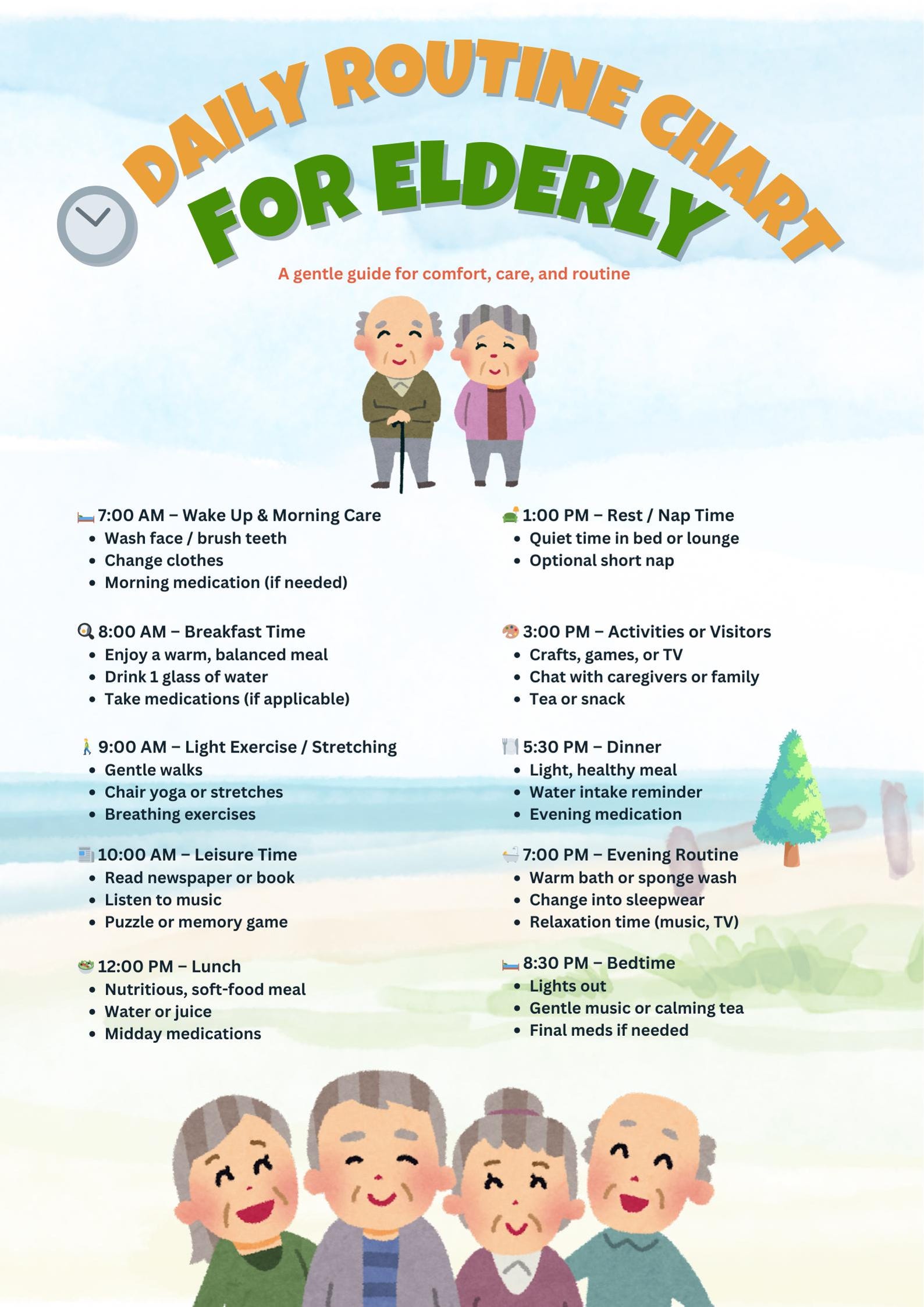
The following example shows how daily activities can fit together. It is a general illustration, not a medical prescription. Adjust the timing for the person’s sleep needs, medicines, appointments, culture, and preferences.
7:30 a.m. — Wake up and get ready
Use the bathroom, wash, dress, open the curtains, and complete personal care with help if needed.
8:00 a.m. — Breakfast
Eat a suitable meal and follow any prescribed morning medication instructions.
9:00 a.m. — Gentle activity
Take a safe walk, stretch as advised, tend plants, or do a light task that matches the person’s ability.
10:00 a.m. — Social or enjoyable time
Read, call a friend, listen to music, work on a hobby, or attend a planned community activity.
12:00 p.m. — Lunch
Eat a balanced meal suited to personal and medical needs, and have an appropriate drink if permitted.
1:00 p.m. — Rest
Take a quiet break or a short nap if needed without forcing a rest period that disrupts nighttime sleep.
2:30 p.m. — Meaningful activity
Choose a hobby, family visit, simple household task, or another enjoyable activity.
5:30 p.m. — Dinner and evening care
Eat dinner, complete any scheduled care tasks, and prepare items needed for the next day.
8:00 p.m. — Wind down
Reduce stimulation, enjoy a calming activity, complete bedtime hygiene, and prepare for sleep at a suitable time.
Signs That the Routine Is Working
A useful routine should make everyday life more manageable, not simply make the schedule look organized. The older adult may feel more comfortable with the flow of the day, complete important tasks more consistently, and have regular chances to rest and connect with others.
Review the plan if the person often misses meals, seems rushed, resists activities, becomes more tired, or loses opportunities for social contact. These signs may mean the routine is too demanding or poorly matched to current needs. New or unexplained health changes should be assessed rather than treated as a scheduling problem.
Daily needs are met
Meals, personal care, prescribed treatment, rest, and suitable activity happen with fewer avoidable reminders or missed tasks.
The person feels involved
The older adult can make choices and take part in activities that matter to them.
The plan remains flexible
Changes in energy, appointments, health, and personal preference can be accommodated without conflict.
Common Routine Mistakes Families and Caregivers Should Avoid
A routine should support the older adult, not become a source of pressure. Families may create a schedule with good intentions but overlook the person’s preferences, health limits, or need for independence. A plan that is too strict can increase stress and make everyday activities harder.
It is also a mistake to assume that a routine can solve every problem. Ongoing pain, depression, confusion, poor sleep, or a loss of appetite may need professional assessment. Routine can support care, but it is not a substitute for diagnosis, treatment, or personal attention.
Making every minute mandatory
Use broad time windows and familiar patterns instead of demanding that every activity begin at an exact time.
Ignoring personal preferences
Ask what the older adult enjoys and respect their choices whenever possible.
Scheduling too many activities
Leave room for quiet time, unexpected events, and recovery after demanding tasks or appointments.
Overlooking safety risks
Review fall risks, bathroom access, lighting, mobility aids, and any activity that requires supervision.
Changing too much at once
Introduce one or two practical changes and assess their effects before adding more.
Treating sudden changes as normal aging
Seek medical advice for new confusion, weakness, marked behavior changes, or unexplained decline in daily function.
When to Seek Medical or Caregiving Support
Professional support may be needed when an older adult can no longer manage essential daily tasks safely, has repeated falls, struggles to eat or drink, or experiences persistent sleep or mood problems. A primary care clinician can review possible medical causes and help identify suitable services.
In the United States, families can also contact the local Area Agency on Aging to ask about caregiver support, transportation, meal services, and community programs. If daily care needs exceed what family members can safely provide, discuss options with the person’s health care team and relevant local aging services.
Sudden confusion, difficulty breathing, signs of stroke, severe chest pain, or loss of consciousness can signal an emergency. Call 911 in the United States for a suspected medical emergency rather than waiting to see whether a routine change helps.
Contact a health professional
Seek guidance for persistent symptoms, new mobility problems, unexplained weight loss, or difficulty following a care plan.
Ask about community support
Explore local aging services, adult day programs, meal support, transportation, and respite care when available.
Frequently Asked Questions
Q
Why is routine important for elderly people?
Routine helps older adults organize daily tasks, maintain familiar habits, and create regular opportunities for meals, sleep, movement, and social contact. It can also help caregivers coordinate support and notice changes in health or behavior. The best routine is flexible and respects the person’s preferences and abilities.
Q
What is a good daily routine for an elderly person?
A good daily routine includes a suitable wake-up time, personal care, regular meals, prescribed medication, safe movement, rest, enjoyable activities, social contact, and a calming bedtime pattern. The exact schedule should reflect the person’s health, energy, living situation, and medical instructions.
Q
Can routine help seniors with dementia?
Yes. Familiar routines, simple instructions, and clear visual cues may make daily tasks easier for some people with dementia. However, routines do not stop the condition from progressing, and sudden confusion or major behavior changes require medical assessment.
Q
How can family members help an elderly person follow a routine?
Family members can build a simple plan with the older adult, use calendars or reminders, prepare accessible meals, arrange regular social contact, and keep essential items in familiar places. They should allow enough time for tasks, respect the person’s choices, and adjust the plan when needs change.
Q
Should older adults follow the same routine every day?
Older adults often benefit from keeping a few daily habits consistent, especially around sleep, meals, and prescribed treatment. However, the routine does not need to be identical every day. It should allow for appointments, visitors, personal interests, changing energy levels, and the need for rest.
Q
What if an elderly person refuses to follow a routine?
First, try to understand the reason for the refusal. The plan may feel too strict, the activity may be uncomfortable, or pain, fatigue, anxiety, or confusion may be affecting the person’s response. Offer choices, simplify the task, and make changes together. If refusal is new or occurs with other health changes, seek professional advice.
Q
Does a daily routine improve sleep in older adults?
Regular sleep and wake times, daytime light, suitable physical activity, and calming evening habits may support better sleep. Persistent insomnia, severe daytime sleepiness, or symptoms of a sleep disorder should be discussed with a health professional because a schedule alone may not address the cause.
✦ Wrapping Up
Conclusion
A daily routine can help older adults maintain a sense of order, support independence, and make time for essential needs. Regular patterns for meals, sleep, personal care, movement, and social contact may improve the way daily life feels and help families coordinate care. For people with memory problems, familiar activities and simple cues may make some tasks easier to manage.
The most effective routine is one that fits the person rather than forcing the person to fit the schedule. Start with a few useful habits, include the older adult in decisions, and make adjustments when health, energy, or preferences change. Remember that routines support well-being but do not replace medical care when symptoms or new problems arise.
💡 Key Takeaway
Start today by choosing three helpful daily anchors: a regular time to begin the day, a consistent meal pattern, and a calming evening habit. Add safe movement and meaningful social contact as appropriate, then review the routine with the older adult after one week to see what helps and what needs to change.