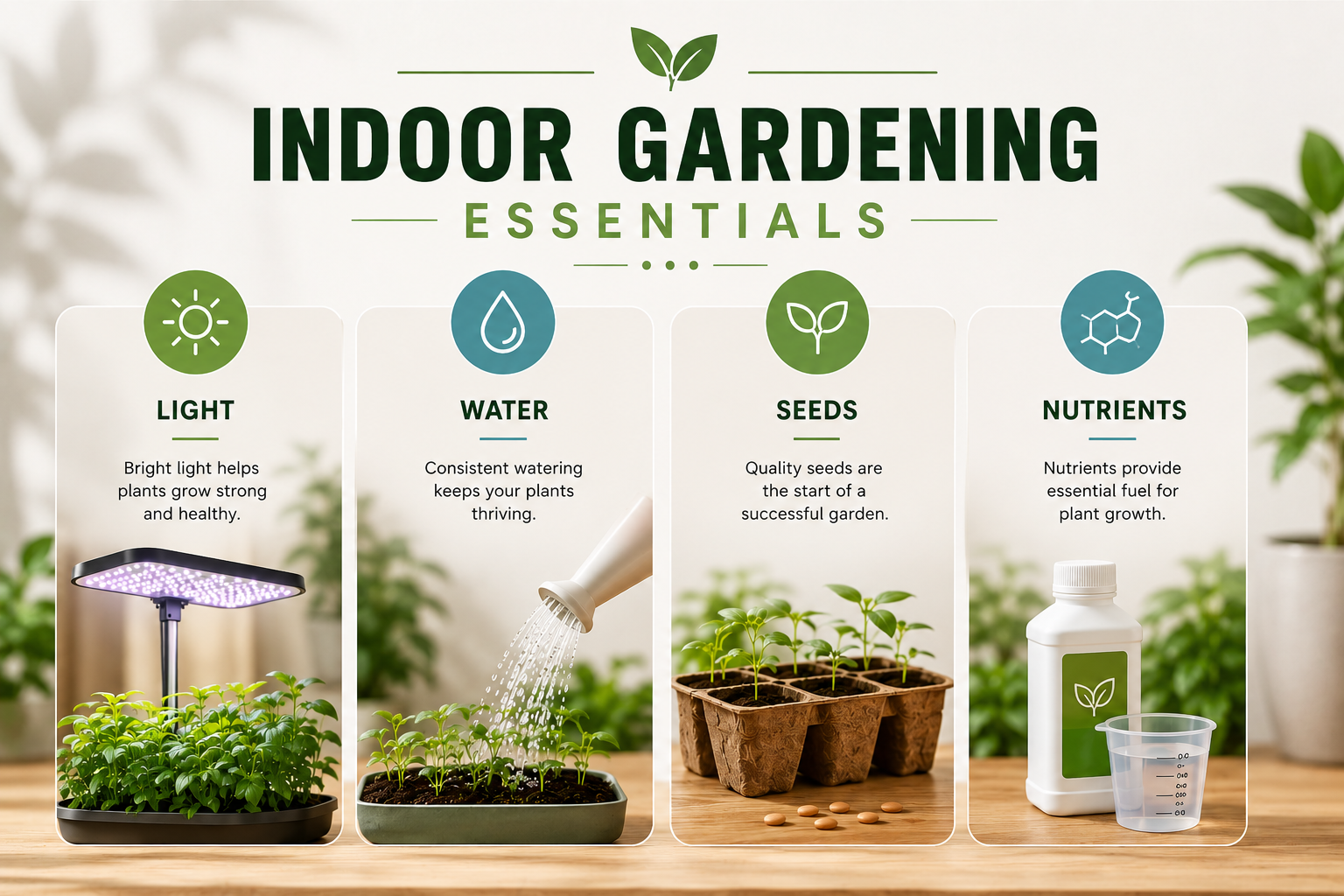
To start indoor gardening, you need suitable containers, quality potting mix, healthy plants or seeds, enough light, clean water, and basic care tools. A grow light, plant food, and a thermometer may help when your home lacks the right growing conditions.
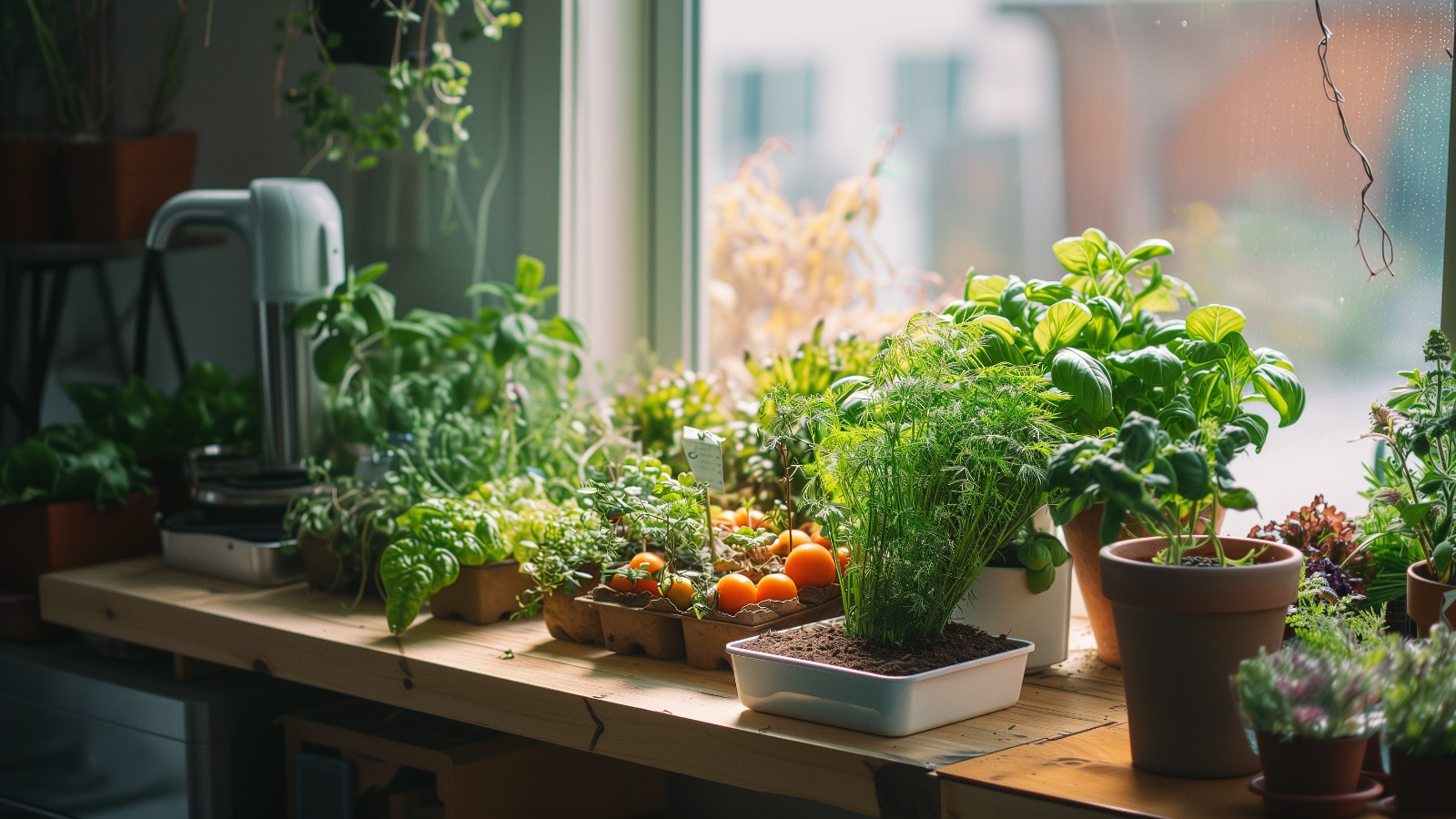
Across the United States, indoor gardening gives people a way to grow fresh herbs, leafy greens, houseplants, and small vegetables throughout the year. You can start in a sunny apartment in New York, a suburban home in Texas, or a small kitchen in California. You do not need a greenhouse or a large budget. A bright windowsill and a few suitable pots can be enough for a simple first garden.
The supplies you need depend on what you want to grow and where you plan to place your plants. Basil and lettuce have different light needs from low-light foliage plants. Tomatoes need more room and stronger light than many common herbs. The best approach is to choose your plants first, check your available space, and buy only the supplies that solve a real growing need.
This guide explains the essential indoor gardening supplies, how to choose them, and how to set up a healthy growing space. It also covers watering, drainage, lighting, plant nutrition, pest control, and common beginner mistakes. With a simple plan, you can create an indoor garden that fits your home, budget, and daily routine.
Source: growindoors.net
1. What Supplies Do You Need for Indoor Gardening?
The basic indoor gardening supplies are containers, potting mix, plants or seeds, water, light, and a few simple tools. These items support the main needs of a plant: room for roots, access to air and water, nutrients, and enough light for growth. Most beginners can start without expensive equipment.
Before shopping, decide whether you want to grow decorative houseplants, culinary herbs, leafy greens, or fruiting vegetables. This choice affects the size of your pots, the type of growing medium, the amount of light you need, and whether extra equipment is useful.
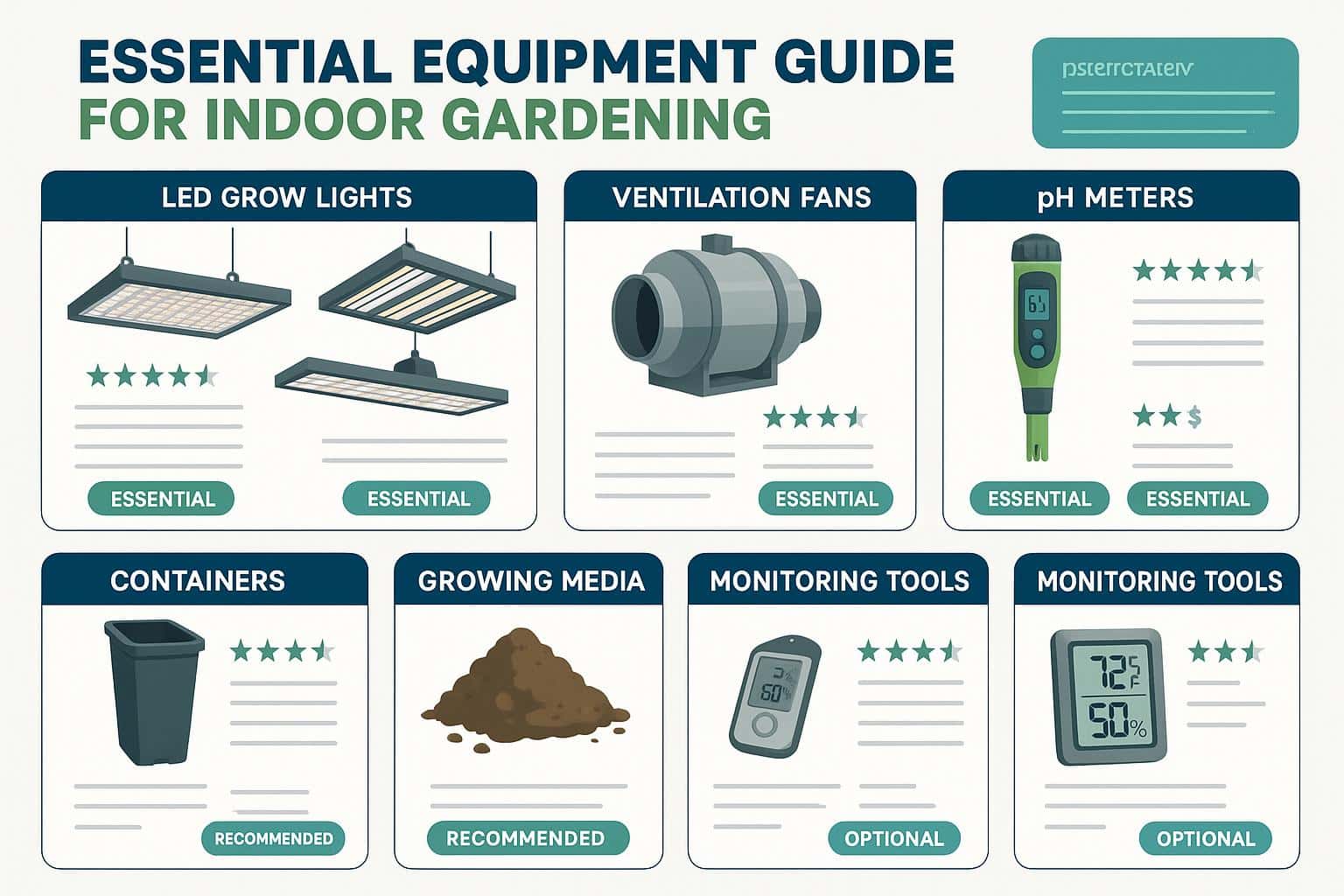
The following table separates essential supplies from items that may be helpful later. It is designed to prevent overspending while ensuring that your plants receive the care they need.
Source: organicgardenadvice.com
Essential supplies
Containers with drainage, indoor potting mix, seeds or healthy plants, clean water, and a suitable light source.
Useful basic tools
A small watering can, hand trowel, pruning scissors, and a tray to catch excess water.
Optional equipment
LED grow lights, a thermometer, a humidity meter, liquid fertilizer, and a soil moisture meter.
Specialized supplies
Hydroponic reservoirs, nutrient solutions, air pumps for systems that require them, and pH testing supplies for hydroponic growing.
Start With a Simple Indoor Gardening Budget
A small indoor garden can begin with a few reused or inexpensive containers, a bag of suitable potting mix, and seeds or starter plants. You may already own a watering can, scissors, and a sunny window. Check what you have before buying new items.
Spend money first on the conditions that directly affect plant health. If your room is too dark for the plants you selected, a suitable grow light is more useful than decorative pots. If your containers hold water, replacing them or improving drainage matters more than buying a moisture meter.
Keep the first setup small
Begin with two or three plants that have similar light and watering needs.
Avoid duplicate tools
Use ordinary household tools when they are clean, safe, and suitable for the task.
2. Choose the Right Pots and Containers
Choose containers that provide enough room for the roots and allow excess water to escape. Pots with drainage holes are a reliable choice for most indoor plants grown in potting mix. Without drainage, water can collect around the roots and reduce the oxygen they need.
Plastic, glazed ceramic, terracotta, and fabric containers can all work indoors. Each has different effects on water retention, weight, cost, and ease of handling. The best option depends on your plant, watering habits, available space, and the surface where the pot will sit.
For a new plant, choose a container that is only moderately larger than its current root ball. An oversized pot holds more wet mix than small roots can use, which may increase the risk of root problems. Plants that grow quickly may need a larger container later.
Source: ecolivingjourney.com
Plastic pots
Lightweight and often inexpensive. They tend to hold moisture longer than unglazed terracotta.
Terracotta pots
Porous clay allows moisture to evaporate through the sides, so the growing mix may dry faster.
Ceramic pots
Glazed ceramic can retain moisture well and offer a stable container. Check for drainage holes.
Fabric pots
These allow airflow through the sides but can dry quickly and may need a waterproof tray indoors.
Do Indoor Plant Pots Need Drainage Holes?
Yes, drainage holes are strongly recommended for most plants grown in ordinary potting mix. They let excess water escape after watering and help reduce the risk of waterlogged roots. Place a waterproof saucer beneath the pot to protect floors and furniture.
Decorative cachepots without holes can still be useful as outer covers. Keep the plant in a separate draining nursery pot, remove it for watering when practical, and empty the outer container after the water has drained. Never allow the roots to sit in standing water for long periods.
Check the pot before planting
Confirm that drainage openings are clear and large enough to release excess water.
Protect indoor surfaces
Use a stable, waterproof saucer and clean up spills promptly.
How Large Should an Indoor Plant Container Be?
The right size depends on the plant’s mature size, root system, and growth rate. A small herb can grow well in a modest pot, while a tomato plant needs a larger container with enough depth and volume to support its roots and water needs.
Read the seed packet or plant label for container guidance. If a plant becomes root-bound, dries out unusually fast, or shows roots emerging from the drainage holes, check whether it needs repotting. These signs should be considered alongside the plant’s growth and overall health.
For herbs and small greens
Choose a container with sufficient depth for the selected variety and enough space for the number of plants.
For larger vegetables
Follow variety-specific container recommendations, especially for tomatoes, peppers, and other fruiting crops.
3. Buy the Right Potting Mix and Growing Medium
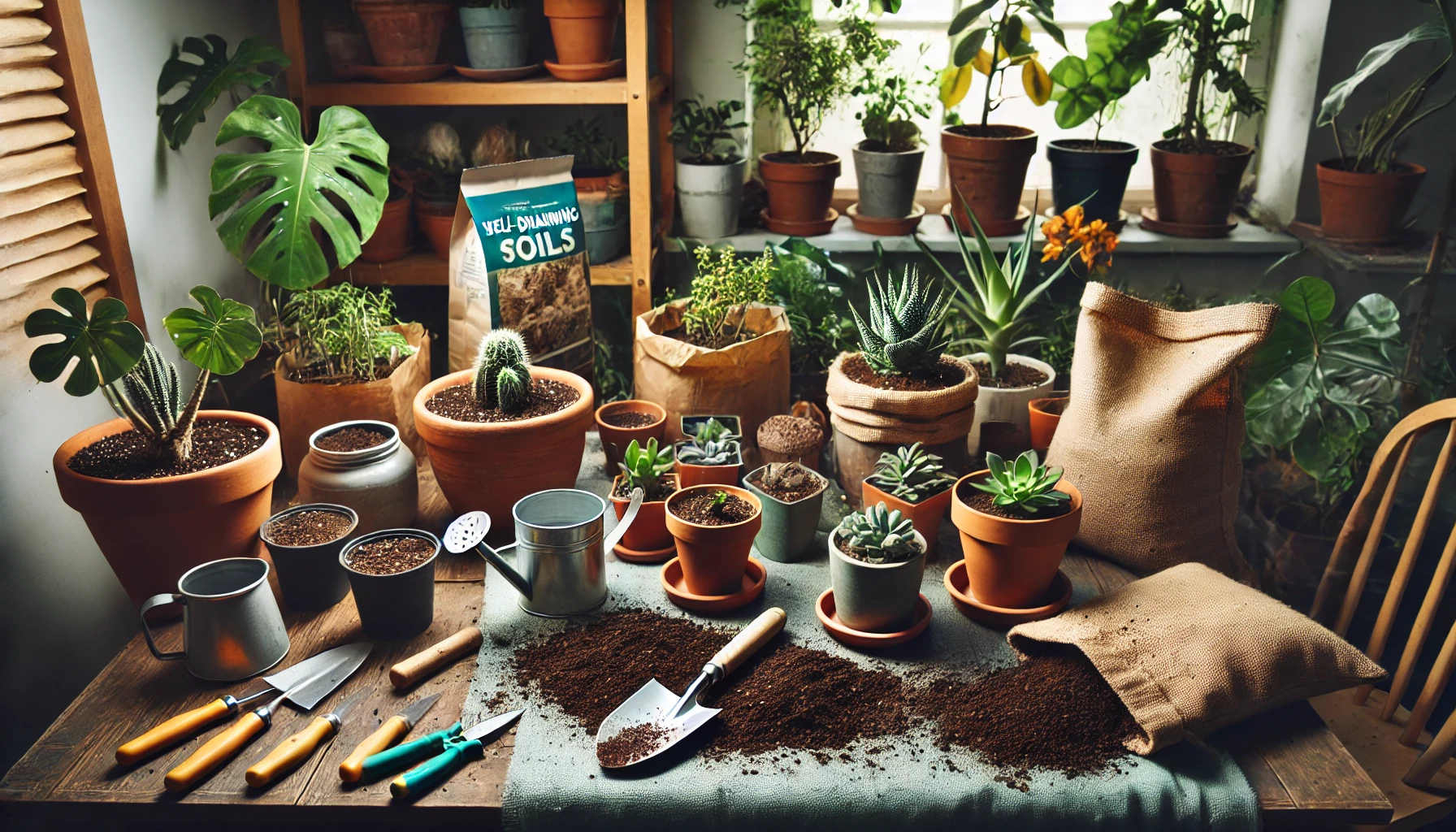
Use a quality indoor potting mix for most houseplants, herbs, and vegetables grown in containers. Potting mixes are designed to balance moisture retention and airflow around roots. Ordinary outdoor garden soil is usually too dense for indoor pots and may contain weed seeds, pests, or disease organisms.
A bag labeled for indoor plants, houseplants, or containers is a practical starting point. Some mixes contain peat, coir, bark, perlite, or other materials that affect drainage and moisture retention. No single blend is ideal for every plant, so check the label and match the mix to the crop.
Succulents and cacti often need a faster-draining medium than moisture-loving tropical plants. Seedlings benefit from a fine, clean seed-starting mix. Orchids commonly require a specialized coarse medium, while hydroponic systems use a different growing method and may need inert materials rather than ordinary potting soil.
Source: indoorgardeningessentials.com
All-purpose indoor potting mix
A useful starting choice for many foliage plants and common container-grown herbs.
Seed-starting mix
A fine-textured medium suited to small seeds and young roots. Follow the seed packet for sowing depth and moisture needs.
Cactus and succulent mix
A faster-draining option for plants that are sensitive to prolonged wet conditions.
Specialty growing media
Bark-based orchid mixes and hydroponic media suit particular growing methods and should not be treated as interchangeable with standard potting mix.
Can You Use Garden Soil for Indoor Gardening?
Garden soil is usually not the best choice for indoor containers. It can compact in a pot, restrict airflow, drain poorly, and bring unwanted organisms indoors. A suitable commercial potting mix is easier to manage for most beginners.
If you make your own mix, use clean ingredients and choose a recipe that fits the plant. Adding random amounts of sand, compost, or fertilizer can create a mix that retains too much water or lacks enough air. Start with a reliable plant-specific recipe rather than guessing.
Avoid compacted soil
Roots need both water and oxygen, so a dense medium can limit healthy growth.
Store growing media properly
Keep unopened or partly used bags dry and protected from contamination.
Should You Add Compost or Perlite?
Compost can add organic matter and nutrients to some container mixes, while perlite can increase air space and drainage. Neither material is required for every indoor garden. Their usefulness depends on the starting mix, the plant, and how quickly the container dries.
Too much compost may cause a mix to stay wet or become overly rich for some seedlings. Adding perlite also does not solve every drainage problem if the pot lacks holes. Check the full growing setup before changing the mix.
Use amendments with a purpose
Choose them to correct a specific moisture, structure, or nutrient need.
4. Select Plants or Seeds That Suit Your Home
Choose plants that match your available light, room temperature, space, and gardening goals. Beginners often have better results when they start with plants that tolerate the conditions they can provide. A plant that looks attractive in a store may struggle if your home lacks its required light or humidity.
If you want food, consider herbs and leafy greens before attempting demanding fruiting crops. Basil, parsley, chives, and some lettuce varieties can work in suitable indoor conditions. Tomatoes, cucumbers, and peppers usually need stronger light, larger containers, and more careful attention to pollination and growth.
Healthy starter plants offer a quicker route to a leafy indoor garden, while seeds give you more choice and can cost less per plant. Seed packets provide useful information about sowing depth, germination temperature, spacing, and harvest timing. Follow the instructions for the specific variety rather than applying one rule to every crop.
Source: hemlocklandscapes.com
For a first houseplant garden
Choose species whose light and watering needs match your room, and check their mature size before buying.
For a kitchen herb garden
Start with a small number of herbs you use often, and provide enough light for compact, sturdy growth.
For leafy vegetables
Choose varieties suited to containers and provide the light, spacing, and cool or warm conditions they require.
For fruiting vegetables
Plan for a stronger light source, a larger pot, regular feeding, and possible hand pollination.
Seeds or Starter Plants: Which Should You Choose?
Seeds are useful when you want to grow several plants, try different varieties, or follow a crop from germination to harvest. They require patience and careful moisture control during early growth. Some seeds also need special treatment or specific temperatures to germinate well.
Starter plants save time because they already have roots and leaves. Inspect them before bringing them home. Avoid plants with sticky residue, visible pests, damaged stems, or widespread yellowing unless you understand the cause and are prepared to manage it.
Choose seeds for variety
Read the packet and check whether the crop is suitable for indoor containers.
Choose starter plants for convenience
Inspect the leaves, stems, and soil surface for signs of stress or pests.
What Can You Grow Indoors All Year?
Many foliage plants and herbs can grow indoors throughout the year when their light, temperature, water, and nutrient needs are met. Leafy greens may also be grown in successive small batches. However, indoor growing conditions still change with the seasons, especially when daylight hours shorten in winter.
Fruiting crops can be harder because they need more intense light and space. A sunny summer window may be adequate for one crop but insufficient during winter. Assess the actual conditions in your home before committing to plants that need high light levels.
Plan for seasonal light
Check whether plants will need supplemental lighting as daylight changes.
Match plants to your schedule
Choose crops whose watering, pruning, and harvesting needs fit the time you can give them.
5. Provide Enough Light for Healthy Growth
Light is one of the most important parts of indoor gardening because plants use it to make the sugars that support growth. A room may look bright to a person but still provide too little usable light for a vegetable or sun-loving herb. Plant needs vary, so judge light by the crop and the actual growing location.
A bright window can be enough for some houseplants and light-tolerant herbs. South-facing windows in the United States often receive strong sunlight, while north-facing windows generally receive less direct sun. East- and west-facing windows offer different patterns of morning and afternoon light, and nearby buildings, trees, blinds, and seasonal sun angles can change the amount that reaches the leaves.
When natural light is insufficient, use a suitable LED grow light. Select a fixture designed for plant growth and follow its recommended hanging distance, coverage area, and operating schedule. A timer can make the schedule more consistent, but plants still need a dark period for normal biological processes.
Source: nutraponics.com
Assess the window
Observe direct sun and overall brightness at the plant’s actual position during different parts of the day.
Use a grow light when needed
Choose coverage and output that suit the plant type and growing area, not just the lamp’s appearance.
Adjust light gradually
Move plants or change light intensity in stages to reduce the risk of leaf scorch or sudden stress.
Use a consistent schedule
Set lighting hours according to the crop and equipment guidance, and include a regular dark period.
Do You Need a Grow Light for Indoor Gardening?
You need a grow light when natural light cannot meet the needs of your chosen plants. This is common for indoor vegetables, seedlings, and sun-loving herbs in dim rooms or during short winter days. Many lower-light foliage plants may need less supplemental lighting, although low-light tolerance does not mean that a plant can grow without light.
A basic household lamp may not deliver enough suitable light at the leaf surface, even if its bulb looks bright. A purpose-built LED grow light can provide a more useful spectrum and coverage. Check the manufacturer’s guidance and watch plant growth to judge whether the setup is working.
Look for weak, stretched growth
Long, thin stems and wide gaps between leaves may indicate insufficient light, although other factors can contribute.
Check for excessive light
Bleached patches, scorch marks, or heat stress can signal that the light is too intense or too close.
How Long Should Indoor Grow Lights Stay On?
The correct lighting duration depends on the species, light intensity, and growth stage. Many indoor growing setups use a consistent daily schedule, but there is no single number of hours that fits every plant. Seedlings, leafy greens, and flowering crops can have different requirements.
Start with the plant or grow-light manufacturer’s guidance, then observe the leaves and growth pattern. Do not assume that doubling the hours will solve weak growth. Light intensity, distance, temperature, and nutrient availability also affect results.
Use a timer
A timer helps maintain a stable schedule and reduces the chance of leaving lights on continuously.
6. Gather Watering Tools and Learn Proper Watering
Indoor plants need clean water, but the amount and frequency depend on the species, pot size, growing medium, room temperature, and light level. A small watering can with a narrow spout gives you control around the base of the plant. For tiny seedlings, a gentle stream or suitable mister may help keep the surface from being disturbed, but misting alone does not replace root watering.
Check the potting mix before watering. For many houseplants, the top layer can dry between waterings, while some plants need more consistent moisture. Succulents generally need the mix to dry more fully than moisture-loving plants. A fixed daily schedule can lead to overwatering when the room is cool or light levels are low.
When a plant needs water, apply it evenly until excess water drains from the bottom. Empty the saucer after drainage rather than letting the pot sit in standing water. Use room-temperature water when practical, and follow the needs of the species, particularly for plants sensitive to water quality.
Source: treecarezone.com
Small watering can
A narrow spout helps direct water into the pot without soaking nearby leaves or furniture.
Waterproof tray
A tray catches drainage and protects indoor surfaces from moisture.
Moisture meter
An optional tool that can help with checks, but its readings should be confirmed by observing the mix and plant.
Clean water source
Use water suitable for the plant. If a species is sensitive to minerals or water treatment, check its specific care needs.
How Can You Tell When an Indoor Plant Needs Water?
Check the potting mix with your finger, assess the pot’s weight, and look at the plant’s condition. A lighter pot and dry mix can indicate that watering is due, but the right threshold differs by plant. Some species wilt when dry, while others may show damage after remaining too wet.
Yellow leaves, drooping stems, and slow growth do not always mean a plant needs more water. Overwatering can cause similar symptoms by damaging roots. Check soil moisture and drainage before adding more water.
Check moisture below the surface
Do not rely only on the appearance of the top layer when the deeper mix may still be wet.
Check drainage
Make sure the pot has open drainage holes and the saucer is not holding excess water.
Should You Mist Indoor Plants?
Misting briefly wets leaf surfaces but usually does not raise room humidity for long. It is not a substitute for proper watering or a reliable way to meet the humidity needs of tropical plants. Repeatedly wet leaves may also encourage disease in some conditions.
If your plants need higher humidity, measure the room conditions first. Depending on the species, a humidifier or grouping plants with similar needs may be more effective. Maintain airflow and avoid making the growing area constantly damp.
Use misting selectively
Follow the needs of the species rather than misting every indoor plant by habit.
7. Understand Fertilizer and Plant Nutrients
Plants need nutrients to build leaves, roots, stems, flowers, and fruit. A quality potting mix may contain starter nutrients, but these can become depleted as plants grow and repeated watering removes some soluble nutrients. Fertilizer can replace nutrients when needed, although adding more is not always better.
For many indoor foliage plants and herbs, a balanced fertilizer labeled for houseplants is a practical option. Some crops need different nutrient ratios during growth or flowering. Read the label for the correct dilution, application method, and frequency, and account for any fertilizer already included in the potting mix.
Overfertilizing can damage roots, cause leaf-tip burn, or leave excess salts in the growing medium. Weak growth does not automatically mean that a plant needs more food. Poor light, root damage, pests, unsuitable temperatures, and watering problems can also slow growth.
Source: gardeningrise.com
Liquid fertilizer
Can be diluted and applied during watering according to the product label.
Slow-release fertilizer
Releases nutrients over time, but the amount and duration depend on the product and growing conditions.
Organic fertilizer
May supply nutrients through organic materials, but suitability and release rates vary by product.
When Should You Fertilize Indoor Plants?
Fertilize when the plant is actively growing and its existing growing medium no longer supplies enough nutrients. Many plants grow more slowly during winter when light levels fall, so they may need less fertilizer then. Indoor conditions vary, however, and some plants continue growing under suitable artificial lighting.
Follow the label rather than applying a stronger dose to encourage faster growth. Avoid fertilizing a severely stressed plant until you identify the cause of the stress. If excess fertilizer salts are suspected, review the product directions and assess drainage before deciding on corrective steps.
Read the fertilizer label
Follow its dilution, frequency, storage, and handling instructions.
Watch plant response
Track new growth and leaf condition instead of feeding on a rigid schedule without checking plant needs.
8. Prepare Basic Gardening Tools and Cleaning Supplies
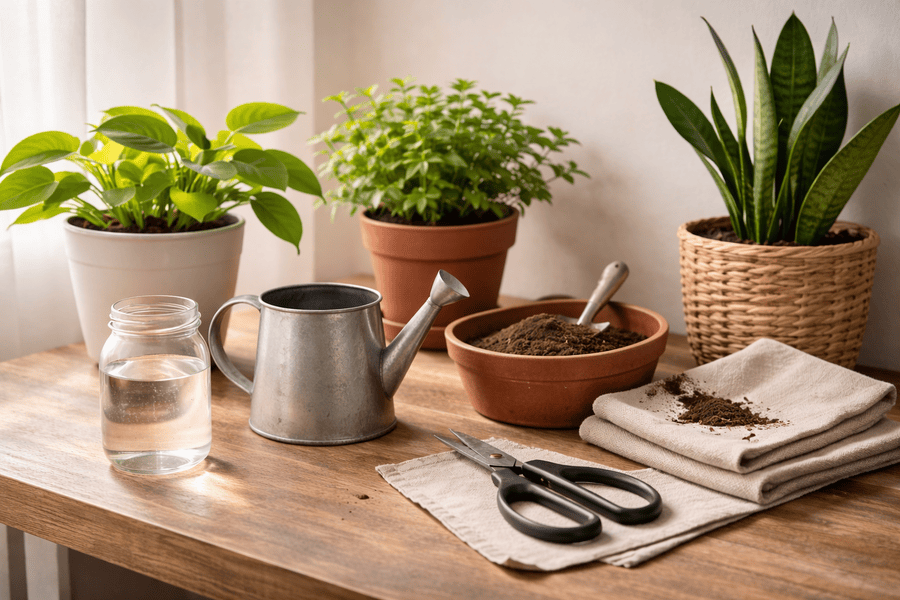
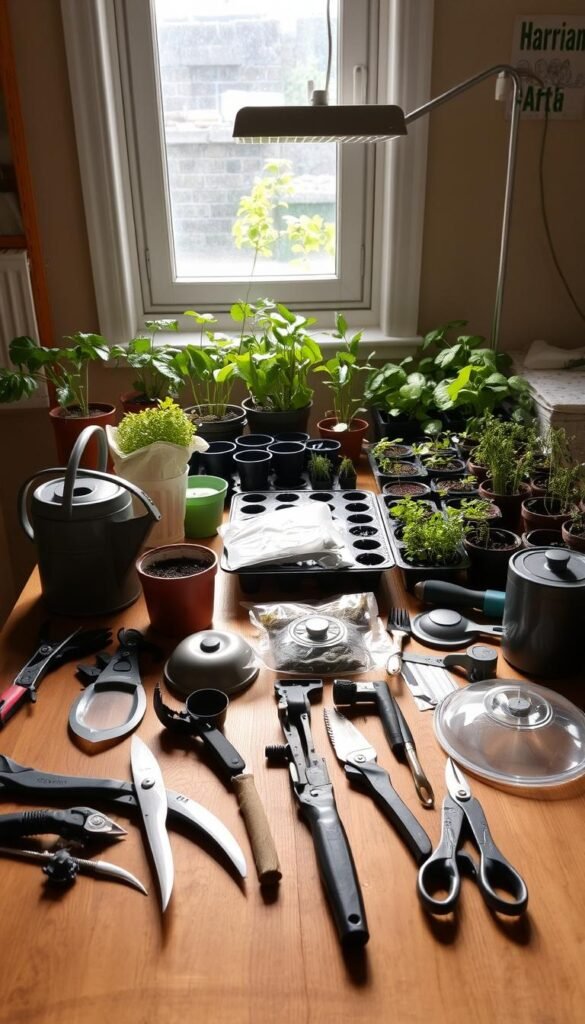
A small set of clean tools makes indoor gardening easier and helps prevent damage to plants. You do not need a large tool collection for a few pots. A hand trowel, pruning scissors, gloves, and a clean container for mixing or moving potting mix can cover many basic tasks.
Pruning scissors help remove dead leaves and trim herbs when needed. Clean blades before moving between plants, especially if you suspect disease. A soft brush or damp cloth can remove dust from suitable leaves, while a small hand tool can help loosen the surface of a compacted mix without harming roots.
Indoor gardening also requires routine cleaning. Remove dead plant material, wipe spilled water, and clean trays before they develop residue. These small steps help keep the growing area tidy and make it easier to spot pests or changes in plant health.
Source: growindoors.net
Hand trowel
Useful for filling pots, moving potting mix, and repotting small plants.
Pruning scissors
Useful for harvesting herbs and removing damaged plant parts with clean cuts.
Gardening gloves
Protect hands from rough materials and plant irritants. Wash after use.
Soft cloth or brush
Helps remove dust from leaves when the plant species tolerates gentle cleaning.
Plant labels
Record plant names, sowing dates, and other details when growing several varieties.
How Do You Keep an Indoor Garden Clean?
Keep tools, trays, and work surfaces clean, and remove dead leaves before they build up. Inspect new plants before placing them near an established collection. If a plant has pests, isolate it while you identify the problem and choose an appropriate treatment.
Use cleaning products according to their labels and keep them away from children, pets, and plants when the instructions require it. Do not mix household chemicals. Wash your hands after handling soil, fertilizer, or plant treatments.
Clean between plants
Reduce the chance of moving pests or plant pathogens from one container to another.
Remove standing water
Empty trays and clean damp surfaces to limit mess and conditions that attract pests.
9. Check Temperature, Humidity, and Airflow
Indoor plants grow best when room conditions match their needs. Many common houseplants tolerate normal household temperatures, but tropical plants, seedlings, and some vegetables may have narrower preferences. Sudden temperature changes can stress plants even when the room seems comfortable to people.
Keep plants away from heating vents, air-conditioning outlets, and cold drafts when these cause rapid changes in leaf temperature or moisture loss. Avoid placing foliage directly against cold winter glass. For edible plants, consider how daytime and nighttime temperatures affect growth and flowering.
Humidity also matters, especially for tropical foliage plants and seedlings. A room that feels dry may cause some plants to develop brown leaf edges or lose moisture quickly. However, increasing humidity without adequate airflow can encourage fungal problems, so balance moisture in the air with good ventilation.
Source: letpot.com
Thermometer
Helps you check whether the growing area remains within the preferred temperature range for your plants.
Humidity meter
Measures relative humidity and helps you decide whether a humidifier is useful.
Air movement
Normal room airflow may be enough for many plants. Avoid strong, constant drafts directly against leaves.
Does Every Indoor Garden Need a Humidifier?
No. Many common houseplants adapt to typical indoor humidity, while others benefit from more moisture in the air. Measure humidity and observe your plants before buying a humidifier. Brown leaf edges can also result from inconsistent watering, salt buildup, or other stress, so they are not proof of low humidity by themselves.
If you use a humidifier, clean it as directed by the manufacturer and avoid allowing condensation to accumulate on walls, windows, or furniture. Group plants with similar humidity needs rather than forcing every species into the same conditions.
Measure before changing conditions
Use a simple humidity meter if you need to confirm the room’s relative humidity.
10. Decide Whether Hydroponics Is Right for You
Hydroponics is a method of growing plants without ordinary soil, using a nutrient solution to supply water and essential minerals to the roots. Some systems use water alone around the roots, while others use an inert growing medium to support the plant. This approach can work well for indoor herbs and leafy greens when the system is matched to the crop.
A hydroponic setup generally needs a suitable reservoir, a growing container or support, the correct nutrient solution, and a reliable source of light. Depending on the system, you may also need a water pump, air pump, tubing, a timer, or tools to monitor pH and nutrient concentration. The equipment required depends on the design rather than a universal shopping list.
Hydroponics can reduce the need for potting mix and offer close control over water and nutrients, but it requires more monitoring than a basic pot garden. Problems with nutrient balance, water temperature, pump operation, or power supply can affect roots quickly. For beginners, a few pots in potting mix are often the simpler and less equipment-intensive option.
Source: organicgardenadvice.com
Choose hydroponics for a planned system
It can suit growers who want to manage nutrient solution and water delivery as part of their routine.
Choose potting mix for simplicity
It usually requires fewer specialized parts and can be easier to manage with a small collection of plants.
Check system requirements
Follow the system manual for pump needs, nutrient levels, sanitation, and water management.
What Equipment Does a Small Hydroponic Garden Need?
A small hydroponic garden needs a container or reservoir, a way to support the plants, water, a suitable nutrient solution, and adequate light. Some systems circulate water, while others use a passive design. Choose equipment that fits the intended crops and the available space.
Follow the manufacturer’s instructions for preparing the nutrient solution and monitoring the system. Use only nutrients designed for the chosen hydroponic method, and keep the reservoir and equipment clean. If the system requires electricity, place connections where they are protected from splashes and follow all electrical safety instructions.
Start with a small system
Grow a limited number of compatible plants until you understand the system’s maintenance needs.
Plan for maintenance
Account for reservoir checks, cleaning, nutrient replacement, and possible equipment failures.
11. Set Up Your Indoor Garden Step by Step
A successful indoor garden starts with a suitable location and a clear plan. Set up the growing area before opening the potting mix or planting seeds. This makes it easier to check light, protect nearby surfaces, and organize the supplies you will use during routine care.
Source: gardeningrise.com
Step 1: Choose the location
Select a stable shelf, windowsill, table, or growing rack with enough room, suitable light, and easy access to water.
Step 2: Check growing conditions
Assess light, room temperature, airflow, and the amount of space available for mature plants.
Step 3: Select suitable plants
Choose varieties that match your conditions and your goals, such as fresh herbs, leafy greens, or foliage plants.
Step 4: Prepare the containers
Check drainage holes, add a suitable potting mix, and leave enough room for watering without spilling.
Step 5: Plant carefully
Follow seed packet directions or plant starter plants at the correct depth. Avoid burying stems or roots in unsuitable ways.
Step 6: Water as needed
Moisten the mix appropriately, allow excess water to drain, and empty the saucer.
Step 7: Add optional equipment
Install a grow light, timer, or humidity tool only if your conditions or selected plants need one.
Step 8: Track plant health
Check moisture, leaf color, new growth, and signs of pests. Adjust one condition at a time when problems appear.
How Do You Know Your Indoor Garden Is Working?
Healthy plants usually show growth that matches their species, with firm stems, appropriate leaf color, and new leaves or roots when conditions support active growth. Seedlings should develop steadily after germination, while established plants may grow slowly during periods of lower light. Not every plant will produce visible growth every week.
Keep a simple record of watering, feeding, sowing dates, and changes in plant position. This makes it easier to spot patterns and identify which adjustments help. When a plant declines, check light, soil moisture, drainage, temperature, and pests before buying additional products.
Look for steady, appropriate growth
Compare new leaves and stems with the normal growth pattern of the plant species.
Review care conditions
Check whether light, water, temperature, and nutrients match the plant’s needs.
12. Common Indoor Gardening Problems and How to Fix Them
Most beginner indoor gardening problems come from a mismatch between the plant and its growing conditions. Yellow leaves, slow growth, drooping stems, and brown edges can have several causes. Check the growing medium and environment before changing fertilizer or adding more water.
Make one change at a time when possible. If you change light, watering, fertilizer, and temperature together, you may not know which action helped or caused more stress. Some damage will remain on older leaves even after the underlying problem is corrected, so assess new growth as well.
Source: ecolivingjourney.com
Yellow leaves
Possible causes include excess water, nutrient problems, poor light, aging leaves, or root damage. Check moisture, drainage, and the pattern of yellowing.
Long, weak stems
Often associated with insufficient light. Assess the light reaching the leaves and adjust the setup gradually.
Brown leaf tips
May result from dry air, inconsistent watering, fertilizer salts, or water quality. Check conditions before treating the symptom.
Wilting despite wet soil
May indicate root stress or root rot rather than a need for more water. Check drainage and the condition of the growing medium.
Small flying insects
Fungus gnats often breed in persistently moist potting mix. Let the mix dry to the level suitable for the plant and remove decaying material.
Sticky leaves or fine webbing
May indicate sap-feeding pests or spider mites. Isolate the affected plant and inspect leaves, stems, and undersides closely.
How Can You Prevent Indoor Plant Pests?
Inspect new plants before bringing them into your growing area, and keep an eye on leaf undersides and new shoots. Avoid keeping potting mix constantly wet when the plant prefers partial drying. Clean containers and remove dead plant matter to reduce conditions that support some pests.
If pests appear, identify them before choosing a treatment. Start with appropriate isolation and physical removal where practical. Use any insecticidal product according to its label, especially around edible plants, children, and pets. Do not assume that a treatment approved for ornamental plants is suitable for herbs or vegetables.
Inspect regularly
Check new growth and leaf undersides for insects, eggs, webbing, and unusual residue.
Avoid unnecessary pesticides
Identify the pest first and select a treatment specifically labeled for the plant and intended use.
What Safety Precautions Matter for Indoor Gardening?
Keep fertilizer, pest treatments, and other garden chemicals in their original labeled containers and out of reach of children and pets. Some houseplants can irritate skin or cause illness if chewed, so identify plants and check their toxicity before placing them where children or animals can reach them.
Use grow lights and powered equipment according to the manufacturer’s instructions. Keep plugs and electrical connections away from water, avoid overloaded outlets, and do not use damaged cords. Protect floors and shelves from leaks, and use sturdy supports for heavy pots and equipment.
Protect children and pets
Check plant toxicity and store tools, fertilizer, and pest products securely.
Manage water and electricity
Keep electrical equipment dry and use safe, stable placement for all powered devices.
Handle growing media carefully
Avoid breathing dust, wash hands after handling potting mix, and follow package precautions.
13. How to Choose Supplies for Different Indoor Gardens
The best indoor gardening supplies depend on the kind of garden you want. A decorative foliage garden can use ordinary containers and a suitable potting mix, while a vegetable garden may need stronger lighting and more room. Hydroponic growing has different equipment needs because it supplies water and nutrients through a managed system.
Use the comparison below to match your goals with the equipment that matters most. The recommendations are starting points, not universal rules; plant variety, room conditions, and the size of your growing area can change the final setup.
Source: treecarezone.com
Houseplants
Start with draining pots, an appropriate indoor mix, a suitable light location, and a watering can.
Culinary herbs
Use containers with drainage, an appropriate potting mix, good light, and pruning scissors for regular harvesting.
Leafy greens
Plan for adequate container depth, consistent moisture, enough light, and a suitable feeding routine.
Indoor tomatoes and peppers
Allow for larger containers, stronger lighting, support where needed, and attention to pollination and nutrients.
Hydroponic herbs and greens
Use a suitable system, nutrient solution, light source, and any pumps or monitoring tools required by the design.
Which Indoor Gardening Supplies Should You Buy First?
For a first garden, buy only the supplies needed to meet the plant’s basic needs. Start with a suitable pot, growing medium, plant or seeds, and a plan for light and water. If you already have a bright location and basic household tools, you may not need anything else at first.
Add equipment after observing the plants. A grow light can address a light shortage, while a humidity meter can help you check conditions for sensitive species. A moisture meter is optional, and it should not replace checking the growing medium and learning the needs of each plant.
First purchase
Choose a plant, its container, a suitable growing medium, and the light source it needs.
Second purchase
Add a grow light or other equipment if the existing home environment cannot meet the plant’s needs.
Later purchases
Consider fertilizer, monitoring tools, and specialized equipment when plant growth or the growing method calls for them.
Frequently Asked Questions
Q
What is the minimum equipment needed for indoor gardening?
The minimum setup includes a suitable container, a growing medium matched to the plant, seeds or a healthy starter plant, clean water, and enough light. A pot with drainage holes is the simplest choice for most plants grown in potting mix. You can add tools and specialized equipment as your garden grows.
Q
Can I start indoor gardening without grow lights?
Yes, if your home provides enough natural light for the plants you choose. A bright window may support some houseplants, herbs, and leafy greens. If plants become stretched or grow poorly because of insufficient light, consider moving them or adding a suitable LED grow light.
Q
What soil is best for indoor gardening?
A quality indoor potting mix is suitable for many houseplants, herbs, and vegetables grown in containers. Choose a specialized mix for plants with distinct needs, such as cacti, succulents, seedlings, or orchids. Avoid ordinary garden soil for most indoor pots because it can compact and drain poorly.
Q
How often should I water indoor plants?
There is no single watering schedule for all indoor plants. Check the moisture in the growing medium, consider the species, and account for pot size, light, and room temperature. Water when the plant’s needs indicate it is time, allow excess water to drain, and empty the saucer.
Q
Do indoor plants need fertilizer?
Many indoor plants need added nutrients over time, especially when they grow in containers for long periods. The timing and amount depend on the plant, potting mix, growth rate, and any nutrients already present. Follow the fertilizer label and avoid feeding a stressed plant before checking other possible causes.
Q
Can I grow vegetables indoors all year?
Yes, many herbs and some leafy vegetables can be grown indoors throughout the year if they receive enough light, suitable temperatures, water, and nutrients. Fruiting vegetables such as tomatoes and peppers generally need stronger light and more space. Supplemental lighting may be necessary during darker months.
Q
Are expensive indoor gardening tools necessary?
No. Beginners can often start with inexpensive pots, suitable potting mix, seeds or starter plants, clean water, and a bright growing location. A grow light is worth considering when natural light is inadequate, but many monitoring tools and specialized accessories can wait until a clear need arises.
Q
Is indoor gardening safe around pets and children?
Indoor gardening can be managed safely, but some plants are toxic or irritating if chewed or touched. Check plant toxicity before bringing a species into your home, and keep fertilizer, pest treatments, sharp tools, and other supplies secured. Follow product labels and keep electrical equipment away from water.
✦ Wrapping Up
Conclusion
The supplies you need for indoor gardening depend on the plants you want to grow and the conditions in your home. For most beginners, the essentials are simple: suitable containers, quality potting mix, seeds or healthy plants, clean water, enough light, and a few basic tools. A grow light, fertilizer, or humidity meter can help when a specific need arises, but you do not have to buy every gardening accessory at once.
Start small and pay attention to how your plants respond. Check moisture before watering, provide the right amount of light, keep containers draining well, and inspect leaves for signs of stress or pests. These habits are more useful than buying extra equipment without a clear purpose.
Whether you want fresh basil in your kitchen, leafy greens on a shelf, or decorative plants in your living room, a thoughtful setup can make indoor gardening manageable throughout the year. Choose plants that fit your space, learn their basic needs, and expand your collection as your skills grow.
💡 Key Takeaway
To get started today, choose one or two plants, find a suitable location, and gather a draining pot, the right growing medium, clean water, and an adequate light source. Add other supplies only when your plants or growing method require them.
Learn how to sterilize gardening tools with safe cleaning methods, effective disinfectants, step-by-step instructions, and tips to prevent plant diseases.